• Steel Solutions
    • Pipe and Tube Supply
      • Used Steel Pipe
      • New Surplus Pipe
    • Tanker Shell Culverts
    • Pumps & Pump Controls
  • Resources
    • Quotes
    • Specials
    • Blog
  • About Us
    • Industries We Serve
      • Agriculture
    • Areas We Serve
      • Arkansas
      • Illinois
      • Louisiana
      • Missouri
  • Contact
  • Menu Menu

Everything You Need To Know About 10 Different Types of Steel Pipes

Steel pipes are precious materials in any industry, from construction and manufacturing to transportation and energy. Their versatility, strength, and durability make them a preferred choice for a wide range of applications. However, not all types of metal pipes are created equal. Different types of steel are designed for certain materials used in making pipes. Understanding these differences is crucial for selecting the right pipe for your project.
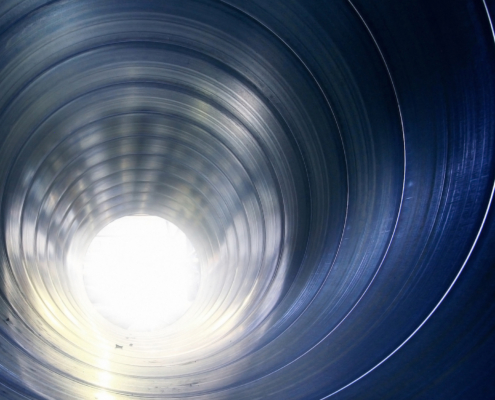
Carbon Steel Pipes

Carbon steel pipes are made from an alloy of iron and carbon. The carbon content typically ranges from 0.2% to 2.1%, influencing the hardness and strength of the steel. These pipes are known for their high tensile strength and durability.

Applications

Carbon steel is widely used in the the oil and gas, chemical processing, and power generation industries. It is also common in structural applications, including building frameworks, bridges, and support structures.

Advantages

  • High strength and durability
  • Cost-effective
  • Excellent for high-pressure applications
  • Versatile and available in various sizes and thicknesses

Stainless Steel Pipes

Stainless steel contains chromium, which provides corrosion resistance. The chromium content typically ranges from 10.5% to 30%, with additional elements such as nickel, molybdenum, and nitrogen enhancing specific properties.

Applications

These pipes are essential in industries where corrosion resistance is critical, such as food and beverage, pharmaceuticals, water treatment, and marine environments. Due to their aesthetic appeal, they are also used in architectural applications.

Advantages

  • Exceptional corrosion resistance
  • High strength and toughness
  • Hygienic and easy to clean
  • Long-lasting and low-maintenance

Alloy Steel Pipes

Alloy steel pipes are made by combining steel with other elements, such as manganese, silicon, nickel, titanium, and copper, to enhance specific properties. These pipes are designed for improved mechanical properties and resistance to wear and corrosion.

Applications

Alloy steel pipes are used in power plants, oil and gas refineries, and high-temperature services. They are also common in the automotive and aerospace industries as components that require high strength and durability.

Advantages

  • Enhanced mechanical properties
  • High strength and toughness
  • Improved resistance to corrosion and wear
  • Suitable for high-temperature and high-pressure applications

Galvanized Steel Pipes

Galvanized steel is coated with a layer of zinc to protect against corrosion. The galvanization process involves either hot-dip galvanizing or electro-galvanizing.

Applications

Galvanized pipes are used in water supply systems, outdoor and industrial applications, and in the construction of fences, railings, and scaffolding.

Advantages

  • Superior corrosion resistance
  • Long-lasting and durable
  • Cost-effective for outdoor applications
  • Easy to install and maintain

Seamless Steel Pipes

Seamless steel is manufactured without a seam, providing uniformity and strength. These pipes are produced using extrusion or rotary piercing, resulting in a smooth surface and consistent structure.

Applications

Seamless steel pipes are crucial in industries where high pressure and integrity are essential, such as oil and gas, chemical processing, and boiler systems. They are also used in hydraulic and pneumatic systems.

Advantages

  • High strength and pressure resistance
  • Uniform structure without weak points
  • Smooth surface and high dimensional accuracy
  • Suitable for high-temperature and high-stress applications

Looking for new surplus or used pipes? Need tank shell culverts or pump accessories? SPP offers a wide range of steel solutions.

Our Steel Solutions

Welded Steel Pipes

Welded steel is made by rolling steel sheets or plates into a cylindrical shape and welding the seam. Welded steel pipes can be manufactured in larger diameters and lengths than seamless pipes.

Applications

Welded steel pipes are commonly used in low- to medium-pressure applications, such as water distribution, plumbing, and construction. They are also used to transport gases and liquids.

Advantages

  • Cost-effective compared to seamless pipes
  • Available in large diameters and lengths
  • Versatile and suitable for various applications
  • Easier and faster to manufacture

Electric Resistance Welded (ERW) Steel Pipes

ERW pipes are a type of welded pipe produced by welding the seam through electrical resistance. This method ensures a high-quality weld without the need for filler material.

Applications

ERW pipes are used in oil and gas transportation, water and sewage systems, and structural applications. They are also common in the automotive industry for chassis components.

Advantages

  • High-quality, consistent welds
  • Cost-effective and efficient production
  • Suitable for high-pressure applications
  • Available in various sizes and thicknesses

Spiral Welded Steel Pipes

Spiral welded steel is made by spirally winding and welding steel coils. This manufacturing method allows for the production of large-diameter pipes with high strength and flexibility.

Applications

These pipes are used in water and wastewater systems, oil and gas pipelines, and structural applications such as piling and support columns.

Advantages

  • High strength and flexibility
  • Suitable for large-diameter applications
  • Cost-effective for long-distance transportation
  • Good resistance to stress and pressure

Longitudinally Submerged Arc Welded (LSAW) Steel Pipes

LSAW pipes are manufactured by bending and welding steel plates along the longitudinal axis. This process produces high-strength pipes with a smooth interior surface.

Applications

LSAW pipes are used in high-pressure and high-temperature applications, such as oil and gas pipelines, water transmission, and structural components.

Advantages

  • High strength and durability
  • Suitable for large-diameter and thick-walled applications
  • Smooth interior surface for efficient flow
  • Excellent resistance to pressure and temperature

Double Submerged Arc Welded (DSAW) Steel Pipes

DSAW pipes are produced by welding inside and outside the seam, providing extra strength and integrity. This method is used for large-diameter pipes.

Applications

These pipes are used in high-pressure and high-stress environments, including oil and gas pipelines, water transmission, and structural applications.

Advantages

  • Extra strength and integrity
  • Suitable for large-diameter applications
  • High resistance to pressure and stress
  • Reliable and durable

Steel Pipe Pros: Your Source for the Best Materials in the Pipe Industry

At Steel Pipe Pros, we provide top-quality materials for all your piping needs. From new surplus pipe to used steel options, we offer a diverse range of products to suit every project. Get in contact with our team today to get the ball rolling.

Share This Post

  • Share on Facebook
  • Share on X
  • Share on Pinterest
  • Share on LinkedIn
  • Share on Tumblr
  • Share on Vk
  • Share on Reddit
  • Share by Mail

More Like This

8 Steps to Choosing the Right Agricultural Piping Supplier for Your Farm’s Needs

Industries, Steel Pipe
https://steelpipepros.com/wp-content/uploads/2025/11/8-Steps-to-Choosing-the-Right-Agricultural-Piping-Supplier-for-Your-Farms-Needs.jpg 1250 2000 Abstrakt Marketing /wp-content/uploads/2023/10/Steel-Pipe-Pros-Logo-1.svg Abstrakt Marketing2025-11-12 10:51:342026-08-13 11:01:488 Steps to Choosing the Right Agricultural Piping Supplier for Your Farm’s Needs
Irrigation system on farm

Culvert Design Considerations for Midwest Farms

Culvert Pipes
https://steelpipepros.com/wp-content/uploads/2025/11/Irrigation-system-on-farm.jpg 1250 2000 Abstrakt Marketing /wp-content/uploads/2023/10/Steel-Pipe-Pros-Logo-1.svg Abstrakt Marketing2025-11-10 13:17:112026-08-13 11:01:49Culvert Design Considerations for Midwest Farms

Buying Used Steel Culvert Pipes: What to Inspect Before You Purchase

Steel Pipe, Used Steel Pipes
https://steelpipepros.com/wp-content/uploads/2025/10/Buying-Used-Steel-Culvert-Pipes_-What-to-Inspect-Before-You-Purchase.jpg 1250 2000 Abstrakt Marketing /wp-content/uploads/2023/10/Steel-Pipe-Pros-Logo-1.svg Abstrakt Marketing2025-10-10 11:29:392026-08-13 11:01:49Buying Used Steel Culvert Pipes: What to Inspect Before You Purchase

Tips for Effective Stormwater Management: Culvert Design 

Tanker Shell Culverts
https://steelpipepros.com/wp-content/uploads/2025/10/Culvert-Design-Tips-for-Effective-Stormwater-Management.jpg 1250 2000 Abstrakt Marketing /wp-content/uploads/2023/10/Steel-Pipe-Pros-Logo-1.svg Abstrakt Marketing2025-10-10 10:58:122026-08-13 11:01:49Tips for Effective Stormwater Management: Culvert Design 

A Guide to Irrigation and Pipe Installation: Best Practices and Tips

Steel Pipe
https://steelpipepros.com/wp-content/uploads/2025/08/A-Guide-to-Irrigation-and-Pipe-Installation_-Best-Practices-and-Tips_.jpg 1250 2000 Abstrakt Marketing /wp-content/uploads/2023/10/Steel-Pipe-Pros-Logo-1.svg Abstrakt Marketing2025-08-12 10:52:492026-08-13 11:01:50A Guide to Irrigation and Pipe Installation: Best Practices and Tips

Exploring Rust Removal Techniques for the Maximum Longevity of Used Steel Pipes

Steel Pipe
https://steelpipepros.com/wp-content/uploads/2025/06/Steel-pipes-with-rust.jpg 1250 2000 Abstrakt Marketing /wp-content/uploads/2023/10/Steel-Pipe-Pros-Logo-1.svg Abstrakt Marketing2025-06-23 10:05:132026-08-13 11:01:51Exploring Rust Removal Techniques for the Maximum Longevity of Used Steel Pipes
Worker measuring steel pipe

Thickness Selection: How to Size Used Steel Pipes for Your Next Project

Steel Pipe, Steel Pipe Selection
https://steelpipepros.com/wp-content/uploads/2025/06/Worker-measuring-steel-pipe-1.jpg 1250 2000 Abstrakt Marketing /wp-content/uploads/2023/10/Steel-Pipe-Pros-Logo-1.svg Abstrakt Marketing2025-06-09 14:26:152026-08-13 11:01:52Thickness Selection: How to Size Used Steel Pipes for Your Next Project
An Overview of Pipe Strength Testing

An Overview of Pipe Strength Testing

Steel Pipe
https://steelpipepros.com/wp-content/uploads/2025/05/An-Overview-of-Pipe-Strength-Testing.jpg 1250 2000 Abstrakt Marketing /wp-content/uploads/2023/10/Steel-Pipe-Pros-Logo-1.svg Abstrakt Marketing2025-05-21 07:53:072026-08-13 11:01:52An Overview of Pipe Strength Testing
Steel pipes stacked on top of each other

Can My Project Use Steel Pipes for Plumbing and Water Supply Support?

Plumbing, Steel Pipe
https://steelpipepros.com/wp-content/uploads/2025/05/Steel-pipes-stacked-on-top-of-each-other.jpg 1250 2000 Abstrakt Marketing /wp-content/uploads/2023/10/Steel-Pipe-Pros-Logo-1.svg Abstrakt Marketing2025-05-20 10:20:082026-08-13 11:01:53Can My Project Use Steel Pipes for Plumbing and Water Supply Support?
Previous Previous Previous Next Next Next

Categories

  • Culvert Pipes
  • Industries
  • Irrigation
  • NRCS
  • NRCS Funding
  • Plumbing
  • Steel Pipe
  • Steel Pipe Purchasing
  • Steel Pipe Selection
  • Tanker Shell Culverts
  • Testing Used Steel
  • Used Steel Pipes

Contact Us

"*" indicates required fields

Location

Address
1536 North Broadway
St. Louis, MO 63102

Get In Touch

Phone
314-325-6181

Email
kyle@steelpipepros.com
brian@steelpipepros.com

Social
LinkedIn

Services

Steel Solutions

Pipe and Tube Supply

Used Steel Pipe

New Surplus Pipe

Tank Shell Culverts

About Us

We are the go-to supplier of steel pipe products and solutions nationwide.

Contact Us
Website by Abstrakt Marketing Group ©
  • Sitemap
  • Privacy Policy
Link to: The Role of Tank Shell Culverts in Sustainable Urban Planning Link to: The Role of Tank Shell Culverts in Sustainable Urban Planning The Role of Tank Shell Culverts in Sustainable Urban PlanningExposed pipe in the dirt Link to: Drill Pipes: The What, Why, and Types Link to: Drill Pipes: The What, Why, and Types Front view of many drill pipesDrill Pipes: The What, Why, and Types
Scroll to top Scroll to top Scroll to top

This site uses cookies. By continuing to browse the site, you are agreeing to our use of cookies.

AcceptLearn more

Cookie and Privacy Settings


How we use cookies

We may request cookies to be set on your device. We use cookies to let us know when you visit our websites, how you interact with us, to enrich your user experience, and to customize your relationship with our website.

Click on the different category headings to find out more. You can also change some of your preferences. Note that blocking some types of cookies may impact your experience on our websites and the services we are able to offer.

Essential Website Cookies

These cookies are strictly necessary to provide you with services available through our website and to use some of its features.

Because these cookies are strictly necessary to deliver the website, refusing them will have impact how our site functions. You always can block or delete cookies by changing your browser settings and force blocking all cookies on this website. But this will always prompt you to accept/refuse cookies when revisiting our site.

We fully respect if you want to refuse cookies but to avoid asking you again and again kindly allow us to store a cookie for that. You are free to opt out any time or opt in for other cookies to get a better experience. If you refuse cookies we will remove all set cookies in our domain.

We provide you with a list of stored cookies on your computer in our domain so you can check what we stored. Due to security reasons we are not able to show or modify cookies from other domains. You can check these in your browser security settings.

Other external services

We also use different external services like Google Webfonts, Google Maps, and external Video providers. Since these providers may collect personal data like your IP address we allow you to block them here. Please be aware that this might heavily reduce the functionality and appearance of our site. Changes will take effect once you reload the page.

Google Webfont Settings:

Google Map Settings:

Google reCaptcha Settings:

Vimeo and Youtube video embeds:

Accept settingsHide notification only